The office design trends of 2020 and beyond continue to reflect the modern needs not only of businesses and their employees, but of the environment. Talent has gone global, and attracting and keeping the best people is no longer as simple as a slightly better salary package.
What changed since 2010
The 2010s saw a significant move towards sustainability in the workplace: more daylight, reclaimed timber, cloud computing. Offices turned into bright, colourful spaces; furniture makers added power and USB to most pieces; and the social side of work, employee health and satisfaction moved to the front of office design.
Dynamic design
Flexible task needs guarantee dynamic design. Furniture gets lighter, walls move, and pieces are not only ergonomic but multifunctional, carrying the technological innovations of the last decade.
Greenery
Greenery becomes second nature: terraced garden walls and water features at the entrance, hanging gardens and indoor plants at the door, and a rooftop garden for lunch in the sun.
Sustainable design
As awareness of our impact grows, the push for sustainability continues through the decade: minimally processed and recycled materials, natural timber and more daylight keep shaping office design.
Experience spaces
With employee satisfaction now a key measure of performance, experience spaces become the norm — VR rooms, climbing walls, meditation areas, game rooms, music booths, rooftop running tracks and day-care facilities.
Your living room at work
Workspaces become increasingly domestic: generous sofas and cushions, a kitchen, an entertainment area, an open terrace — comfortable, inspiring and motivating places to do the day’s work.
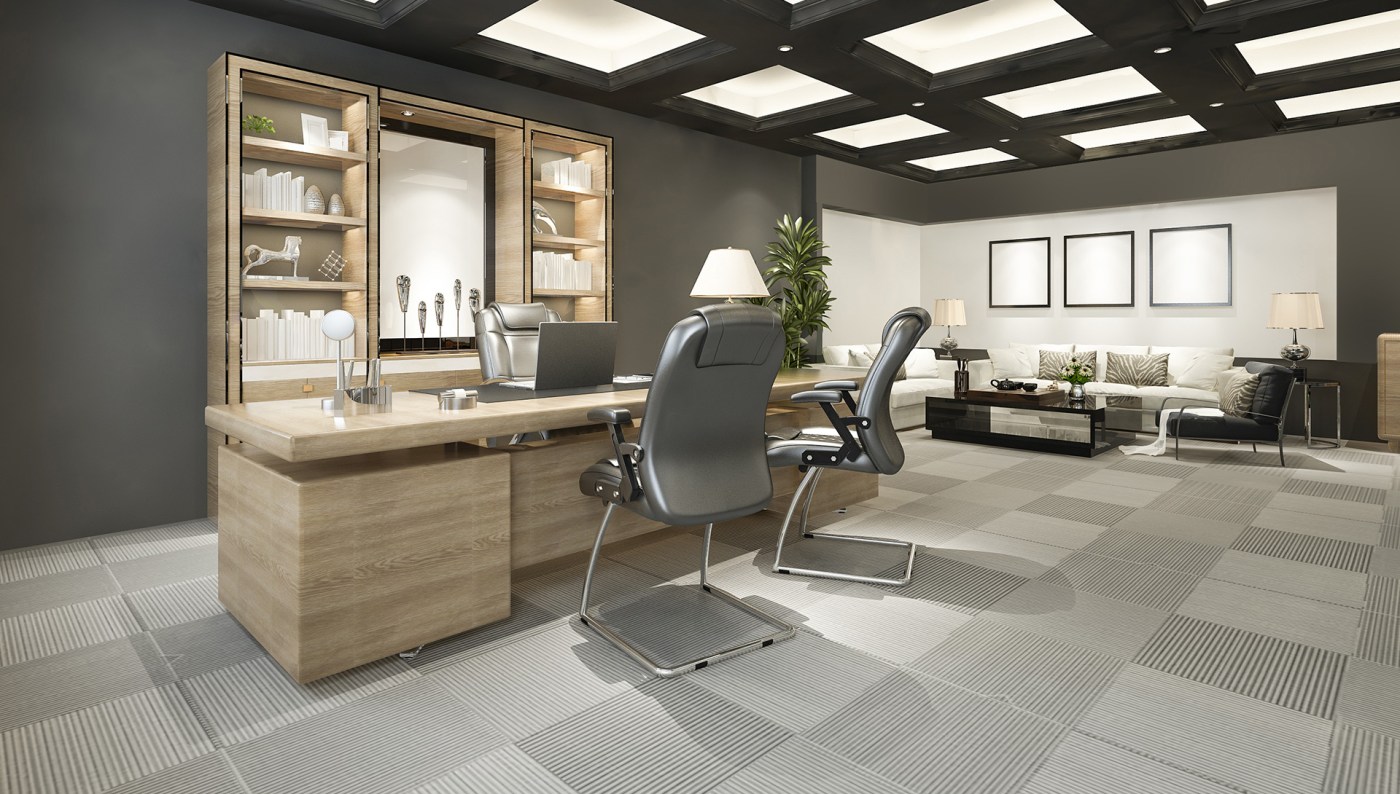
Monochrome variety
Colour choices will be brand-led and primarily monochrome, with different tones, textures and patterns varying across the space to support creative thinking.